
What is eSIM Technology?
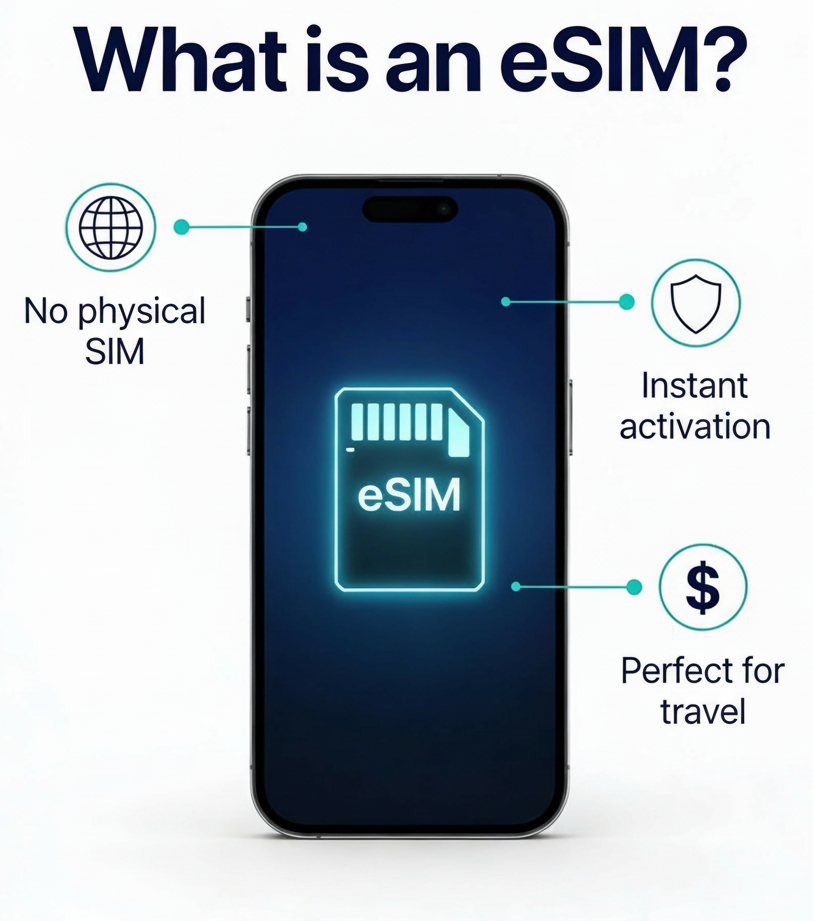
eSIM technology, or embedded Subscriber Identity Module, represents a significant advancement in mobile connectivity, offering a novel alternative to traditional SIM cards. Unlike conventional SIMs, which are physical cards inserted into devices, eSIMs are integrated directly into a device’s hardware. This means that the functionality of the SIM is embedded within the device itself, allowing for enhanced flexibility and convenience.
The eSIM operates in a similar way to traditional SIM cards, facilitating user authentication on mobile networks and managing the user’s subscription. However, because it is not removable, the eSIM dramatically simplifies the process of switching carriers or managing multiple subscriptions. Users can download a new mobile plan without requiring a physical card swap, making it an increasingly attractive option for consumers and businesses alike.
As technology progresses, the adoption of eSIMs is becoming more prevalent across various devices. Smartphones, tablets, and wearables are among the leading categories integrating this technology. Major manufacturers, such as Apple and Samsung, have embraced eSIMs, highlighting their benefits in terms of space-saving design and user-friendly connectivity. The embedded design of eSIMs eliminates the need for a SIM tray, resulting in more compact devices with improved durabilities, such as better water and dust resistance.
Additionally, eSIM technology paves the way for faster connectivity and seamless transitions between different mobile service providers. This promising trend reflects a shift in consumer expectations towards more adaptable mobile solutions, influencing how data plans are managed and purchased. As the industry evolves, eSIMs are poised to play a crucial role in the future of communication technology, catering to a growing demand for convenient and efficient connectivity options.
Advantages of eSIM Over Traditional SIM Cards
The advent of eSIM technology has significantly transformed the landscape of mobile connectivity, offering substantial advantages over traditional SIM cards. One of the most salient benefits is the ability to manage multiple mobile profiles seamlessly. eSIMs allow users to store multiple carrier profiles on a single chip, enabling swift switching between various mobile networks without the need to physically change a SIM card. This feature not only promotes flexibility but also caters to the needs of international travelers who frequently switch carriers to avoid exorbitant roaming fees.
Additionally, eSIM technology simplifies the process of carrier switching. Users no longer need to visit a store or wait for a physical SIM card to be delivered; they can initiate the activation of a new carrier directly from their device. This increased accessibility significantly enhances user experience, making it more convenient for consumers to choose a service provider that best fits their needs.
Enhanced security is another critical advantage of eSIMs. Traditional SIM cards can be easily removed or cloned, posing a risk to personal data and mobile security. In contrast, eSIMs are embedded directly into devices, offering a layer of protection against theft and unauthorized access. Moreover, eSIM technology supports advanced encryption protocols that further bolster the security of user information.
From an environmental standpoint, the reduction of physical clutter and manufacturing costs emerges as a notable benefit. The elimination of plastic SIM cards contributes to less electronic waste, aligning with sustainable practices. Furthermore, manufacturers can cut costs associated with traditional SIM card production and packaging, potentially passing these savings onto consumers. In an increasingly eco-conscious world, the adoption of eSIM technology represents a forward-thinking approach to mobile device design and functionality.
Simphonia’s Data-Only Packages: Designed for Travelers
Travelers frequently encounter the need for reliable internet connectivity, especially when venturing abroad. Simphonia’s data-only eSIM packages offer an innovative solution tailored to meet these requirements. Unlike traditional SIM cards, which necessitate a phone number, Simphonia’s offerings allow users to focus solely on securing data access without the complications associated with phone-based services. This feature makes the packages particularly appealing to those who simply need internet connectivity for browsing, streaming, or communication through data-driven applications.
The setup process for Simphonia’s eSIM packages is designed to be both straightforward and efficient. Upon purchase, travelers receive a QR code via email, which can be scanned with their device to enable data services almost instantaneously. This contrasts significantly with the traditional method of inserting a physical SIM card, which often requires multiple steps, including physical manipulation of the device and sometimes a lengthy activation process. With Simphonia, users can bypass unnecessary delays and be connected to the internet within moments of their arrival at their destination.
Additionally, Simphonia’s data-only packages are versatile and compatible with a wide range of devices, including smartphones, tablets, and other IoT devices that support eSIM technology. This flexibility is crucial for modern travelers who may rely on several different devices for their connectivity needs. Furthermore, the data offered is tailored to various travel durations, ensuring that clients only pay for what they need. This level of customization, paired with the robust nature of eSIM technology, positions Simphonia’s offerings as not just an alternative but a preferred choice for those seeking hassle-free internet access while traveling abroad.
Easy Setup and Affordability: Why Choose eSIM for Travel Needs?
eSIM technology presents a user-friendly solution for travelers, simplifying the often cumbersome task of managing multiple mobile plans while on the go. One of the primary advantages of eSIMs is the ease with which users can set them up. Travelers can activate their eSIMs by scanning a QR code or through a mobile application, removing the need to physically handle SIM cards, which can be both inconvenient and prone to loss. This digital approach not only streamlines the process but also allows for immediate connection to local networks upon arrival at the destination.
Another significant benefit of eSIMs is the affordability of data plans offered by providers like Simphonia. Traditional SIM cards typically require users to purchase a local physical card, which involves additional costs and often contracts locked to certain durations. In contrast, eSIMs allow for flexible and cost-effective plans that can be tailored to short trips or longer stays. As travelers can easily switch between providers, they can choose data packages that suit their specific needs, often resulting in lower costs compared to traditional roaming charges. eSIM technology empowers users to make informed decisions regarding mobile data, ensuring they get the best value while traveling.
Moreover, the flexibility of eSIMs is a standout feature that makes them particularly suitable for globetrotters. Travelers can effortlessly switch to local data plans at various destinations, ensuring uninterrupted connectivity regardless of their location. This capability enhances the travel experience, allowing users to stay connected with family and friends, manage work responsibilities, and access important information without geographic limitations. As eSIMs continue to gain traction in the market, they are poised to transform how international travelers connect, offering a combination of convenience and affordability that traditional SIM cards often cannot match.
What is eSIM Technology?
eSIM technology, which stands for embedded Subscriber Identity Module, represents a significant evolution in mobile connectivity compared to traditional SIM cards. Unlike conventional SIM cards that are removable and stored in a physical slot within a device, eSIMs are permanently embedded into the device’s circuitry. This integration allows for a more streamlined and efficient design, making them particularly advantageous for modern smartphones, tablets, wearables, and IoT devices.
The primary functionality of eSIMs is to store multiple mobile network profiles. This capability allows users to switch between different carriers and data plans without needing to physically replace a SIM card. Instead, activation and configuration can be carried out digitally, via an over-the-air (OTA) update. As a result, eSIM technology empowers users with enhanced flexibility and convenience, particularly for frequent travelers who may need to switch networks regularly.
The development of eSIM technology has been supported by the GSM Association (GSMA), which established the technical standards and protocols necessary to ensure compatibility among various devices and carriers. This has led to widespread adoption across different industries and has sparked innovation in device design. For instance, eSIMs have enabled manufacturers to create thinner and more water-resistant devices by eliminating the need for a dedicated SIM card tray.
In addition to convenience and improved design, eSIM technology offers improved security features. Since the SIM is embedded within the device, it is less vulnerable to theft or loss compared to a physical SIM card that can be easily misplaced. Overall, eSIMs are redefining how mobile connectivity operates, fostering a new era of communication technology and enhancing user experience significantly.
Advantages of eSIM Technology
eSIM technology, or embedded SIM technology, offers numerous advantages over traditional SIM cards that enhance both user experience and device functionality. One of the most significant benefits of eSIMs is the convenience of remote provisioning. Users can activate a mobile service without needing to visit a store physically. This remote capability allows users to seamlessly switch carriers or change plans through their devices, eliminating the tedious process of physically swapping out SIM cards.
Additionally, eSIMs support multiple profiles, enabling users to store several carrier profiles on a single device. This feature is particularly advantageous for frequent travelers who need to connect to different networks around the world. With just a few taps on their device, users can effortlessly switch between various network providers, thus avoiding exorbitant roaming charges and ensuring dependable connectivity wherever they go.
Security is another critical aspect where eSIM technology excels. The embedded nature of eSIMs makes them less susceptible to physical theft or loss, as they are not removable components like traditional SIM cards. Moreover, eSIMs support advanced encryption and secure provisioning, safeguarding user data against unauthorized access and fraud.
The adoption of eSIM technology also contributes to more streamlined device design. By eliminating the SIM card slot, manufacturers can create slimmer, more compact devices, allowing for larger batteries or additional features. The space-saving capabilities of eSIMs are invaluable in modern device design, promoting innovation and enhancing connectivity experiences overall.
In conclusion, eSIM technology presents a wide array of advantages over traditional SIM cards, including the convenience of remote provisioning, the ability to store multiple profiles, robust security features, and space-efficient designs that contribute to enhanced user experiences.
Key Differences Between eSIM and Traditional SIM Cards
The evolution of mobile communication technology has introduced significant changes, particularly with the emergence of eSIM (embedded SIM) technology. This innovation contrasts with traditional SIM cards in several critical aspects, including physicality, flexibility, and activation processes.
One of the most prominent differences lies in the physical form factor. Traditional SIM cards are removable components that physically slot into mobile devices, often requiring users to manually switch cards when changing networks or devices. In contrast, eSIM technology is embedded within the device’s circuitry, eliminating the need for a physical card. This integration allows for more compact device designs and reduces the chances of damage or wear over time.
Flexibility is another key differentiator between these two SIM types. eSIMs enable users to manage multiple mobile plans directly from their devices without the necessity of swapping physical cards. Users can easily switch between different carriers or plans through device settings or scanning QR codes provided by service providers. This is particularly advantageous for frequent travelers who can configure data-only plans that don’t require a fixed phone number, tailoring their connectivity to specific needs. With eSIM, users can access local data services upon arrival in a new country, bypassing the need for international roaming fees often associated with traditional SIM cards.
Moreover, the activation process for eSIMs is streamlined and user-friendly. Traditional SIM cards commonly require manual activation at a retailer or the insertion of a card followed by setup procedures. In contrast, eSIMs can be activated remotely, allowing users to download their mobile profiles over the air. This ease of activation caters to both consumers and businesses looking to manage connectivity across various devices efficiently.
In this rapidly evolving digital landscape, grasping these differences is essential for users seeking optimal mobile connectivity solutions in a globalized world.
Why Choose Simphonia for eSIM Data Packages?
When it comes to embarking on global travels, choosing the right connectivity solution can greatly enhance your experience. Simphonia stands out in the realm of eSIM technology, providing exceptional data packages tailored specifically for travelers. One of the primary advantages of selecting Simphonia is the convenience of eSIM activation, which allows users to obtain mobile data services easily and quickly, without the need for physical SIM cards.
With Simphonia, the process of setting up an eSIM is straightforward and efficient. Travelers can activate their data package directly on their devices, eliminating the need to visit local stores or deal with the hassle of changing SIM cards. This streamlined activation process ensures that users can focus on their journey rather than worrying about connectivity issues. Additionally, eSIM technology often comes with the advantage of multiple profiles, meaning that users can switch between different carriers or data plans with ease, tailoring their connectivity according to their specific location and needs.
Simphonia offers a range of data-only packages, strategically designed for those on the move. Whether you are traveling for leisure or work, you can benefit from reliable and high-speed internet access. This means that navigating through unfamiliar environments, staying connected with loved ones, or accessing essential work emails while overseas is seamless. Traditional SIM cards can pose challenges, such as varying costs, activation delays, and compatibility issues with devices. In contrast, Simphonia’s eSIM solutions offer immediate connectivity, making it an ideal choice for today’s modern traveler.
In summary, when considering eSIM data packages, Simphonia not only simplifies the activation process but also ensures that you enjoy uninterrupted connectivity worldwide. By choosing Simphonia, you can experience a hassle-free connection that allows you to fully engage in your travels without worrying about connectivity disruptions.